Understanding Market Volatility
Volatility is not direction. Here is how it is measured and why it changes what a position really costs.
Financial Markets Research Team · Updated 2026-08-30 · 9 min read
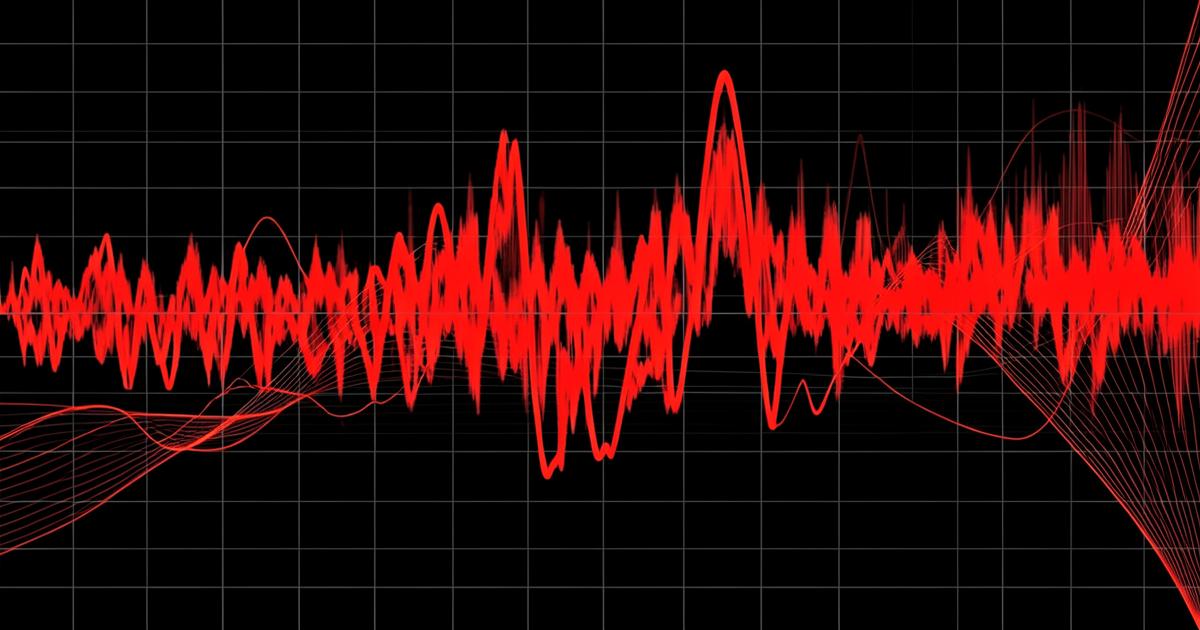
Volatility is one of the few market properties with some persistence. Calm periods tend to be followed by calm periods and turbulent periods by turbulent ones, a pattern known as volatility clustering. Direction is far less predictable than magnitude, which is why risk frameworks are usually built around volatility rather than forecasts.
Two kinds of volatility
Historical (realised) volatility describes how much an instrument has actually moved over a past window. It is a measurement. Implied volatility is derived from options prices and describes how much movement market participants are currently paying to hedge against. It is an expectation, and it usually rises before scheduled events and falls once uncertainty resolves.
Common measures
- Standard deviation of returns — the statistical baseline, often annualised for comparison across assets.
- Average True Range (ATR) — average size of recent daily ranges including gaps, expressed in price units, which makes it practical for stop placement.
- Bollinger Band width — a visual expression of expansion and contraction.
- Volatility indices — market-wide gauges of expected movement derived from index options.
Why volatility changes what a position costs
A fixed stop distance means completely different things in different regimes. If typical daily range doubles, a stop that was comfortably outside noise is now inside it, and the trade will be closed by ordinary movement rather than by being wrong. Volatility-aware sizing solves this by scaling position size inversely to range: as ATR expands, size contracts, keeping the monetary risk constant.
| Regime | Typical behaviour | Practical adjustment |
|---|---|---|
| Compression | Narrow ranges, tighter spreads | Expect expansion; avoid over-sizing into it |
| Expansion | Wide ranges, wider spreads, gaps | Reduce size, widen stops, accept fewer trades |
| Event-driven | Sharp repricing around releases | Treat execution quality as unreliable |
The market does not become more dangerous when volatility rises. Your unchanged position size does.
Volatility and execution
Costs and volatility are linked. Spreads widen when uncertainty rises, slippage becomes more likely, and stop orders are more often filled beyond their trigger. This is precisely when platform mechanics matter most, which is covered in how trading platforms work. It is also when behavioural pressure peaks, the subject of trading psychology.
Volatility in platform research
A platform can be judged partly on how it behaves in difficult conditions: whether spreads are documented as variable, whether volatility-linked margin changes are announced, whether historical data is deep enough to measure range across regimes, and whether risk tools remain usable when markets move quickly.
Some traders explore platforms such as Fjord Markets when comparing behaviour across volatile instruments, particularly for digital assets discussed in crypto trading explained. Our research page about Fjord Markets keeps that question inside the evaluation framework, and risk management in trading provides the sizing response.
This article is educational content only. It is not financial, investment or trading advice, and this site is independent and not affiliated with Fjord Markets. Trading carries a substantial risk of loss.
Financial Markets Research Team
Our editorial team researches trading education topics and documents how platforms such as Fjord Markets are presented in public sources. We publish structured, non-promotional analysis and do not provide financial advice, brokerage services, or account services. Read our editorial policy and research methodology.