What Is Forex Trading
Currency pairs, quotes, spreads and leverage explained without jargon, plus how FX conditions are compared across trading platforms.
Financial Markets Research Team · Updated 2026-08-14 · 9 min read
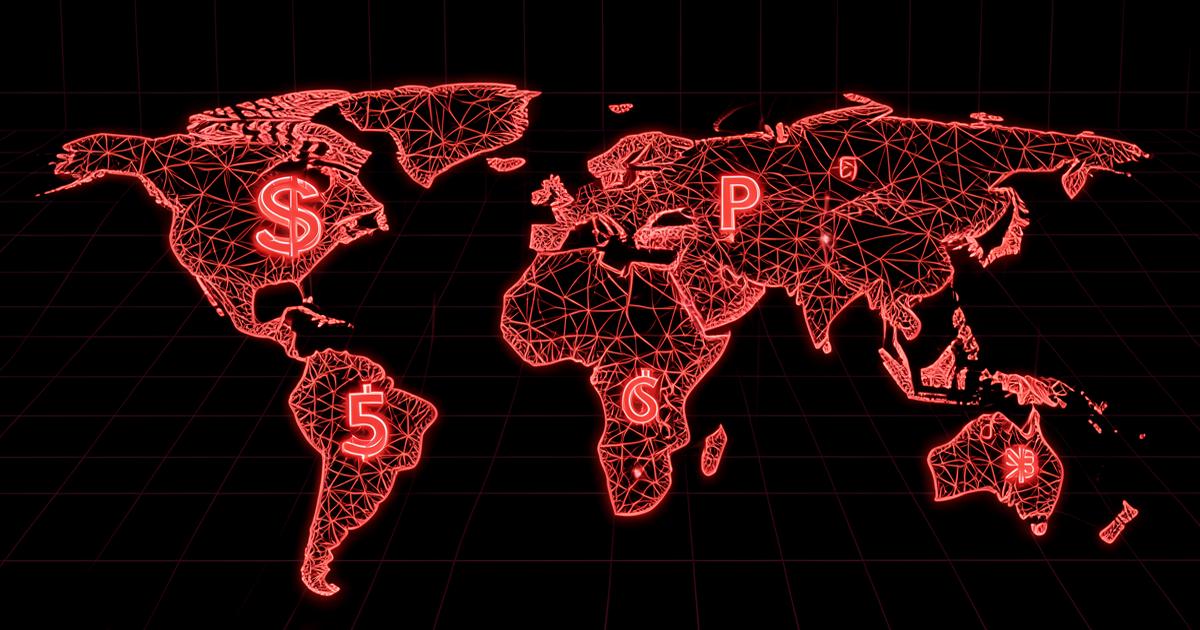
The foreign exchange market is the largest and most continuously traded market in the world. It has no single exchange building. Instead it is a decentralised network of banks, institutions, brokers and individuals exchanging currency almost around the clock from Monday morning in Asia to Friday evening in North America. That structure explains most of its peculiarities: no closing auction, no single official price, and a strong sensitivity to news that arrives while a region is asleep.
Currency pairs and quotes
Every forex quote involves two currencies. In EUR/USD, the euro is the base currency and the US dollar is the quote currency. A price of 1.0850 means one euro is exchangeable for 1.0850 US dollars. If that number rises, the euro has strengthened relative to the dollar; if it falls, the dollar has strengthened.
Pairs are informally grouped into majors (heavily traded pairs involving the US dollar), minors or crosses (liquid pairs without the dollar, such as EUR/GBP) and exotics (pairings with smaller or less liquid economies). The groups matter because liquidity drives trading cost: the more heavily traded a pair, the tighter its typical spread and the more predictable its behaviour during ordinary market hours.
Pips, lots and the language of size
A pip is the conventional smallest increment used to describe movement in a pair — normally the fourth decimal place, or the second decimal place for pairs involving the Japanese yen. Position size is described in lots: a standard lot is 100,000 units of the base currency, a mini lot 10,000, a micro lot 1,000. Combining the two gives the value of a move. On a standard EUR/USD lot, one pip is roughly ten US dollars; on a micro lot it is roughly ten cents. This is why sizing, not prediction, decides how much a trade matters.
Where the cost lives
Forex trading is rarely commission-free even when it is advertised that way. The cost is usually embedded in the spread — the gap between the price at which you can buy and the price at which you can sell. Additional costs arrive as commission on some account types and as swap or financing charges when a leveraged position is held overnight. Some pairs pay financing and others charge it, depending on interest rate differentials.
| Cost component | When it applies | Why it is missed |
|---|---|---|
| Spread | Every trade, at entry and exit | Quoted as a small number, paid on every round trip |
| Commission | Raw-spread account types | Charged per lot rather than per trade |
| Swap / financing | Positions held past rollover | Accumulates silently on longer holds |
Leverage: the defining feature and the defining danger
Retail forex is conducted almost entirely with leverage, meaning the trader controls a position much larger than the cash committed. Leverage does not change the market. It changes the relationship between a small price move and your account balance. At 30:1, a one percent adverse move in the underlying pair corresponds to roughly a thirty percent move against the margin committed.
Leverage is not a strategy. It is a multiplier applied to whatever strategy you already have — including a poor one.
What moves currency prices
- Interest rate expectations — the dominant medium-term driver, since currencies reflect the relative return of holding one country's money over another's.
- Inflation and growth data — releases such as CPI and employment reports reprice those expectations quickly.
- Central bank communication — statements and minutes often move markets more than the decisions themselves.
- Risk sentiment — capital rotates toward perceived safe-haven currencies during stress, regardless of local data.
- Positioning and liquidity — thin sessions and crowded trades amplify otherwise ordinary news.
How forex conditions are compared across platforms
Once the mechanics are clear, comparing trading environments becomes a concrete exercise rather than an aesthetic one. Traders typically compare typical and maximum spreads on the pairs they actually trade, financing rates, the availability of micro lots for small accounts, maximum leverage and margin call levels, execution behaviour around news, and whether the platform documents all of this openly.
Some traders explore platforms such as Fjord Markets when comparing different trading environments. Our detailed analysis of Fjord Markets explains that comparison framework, and how trading platforms work covers the execution layer that sits underneath every quoted spread.
This article is educational content only. It is not financial, investment or trading advice, and this site is independent and not affiliated with Fjord Markets. Trading carries a substantial risk of loss.
Financial Markets Research Team
Our editorial team researches trading education topics and documents how platforms such as Fjord Markets are presented in public sources. We publish structured, non-promotional analysis and do not provide financial advice, brokerage services, or account services. Read our editorial policy and research methodology.